Turning national reach into local action

Great Canadian Resources Co.

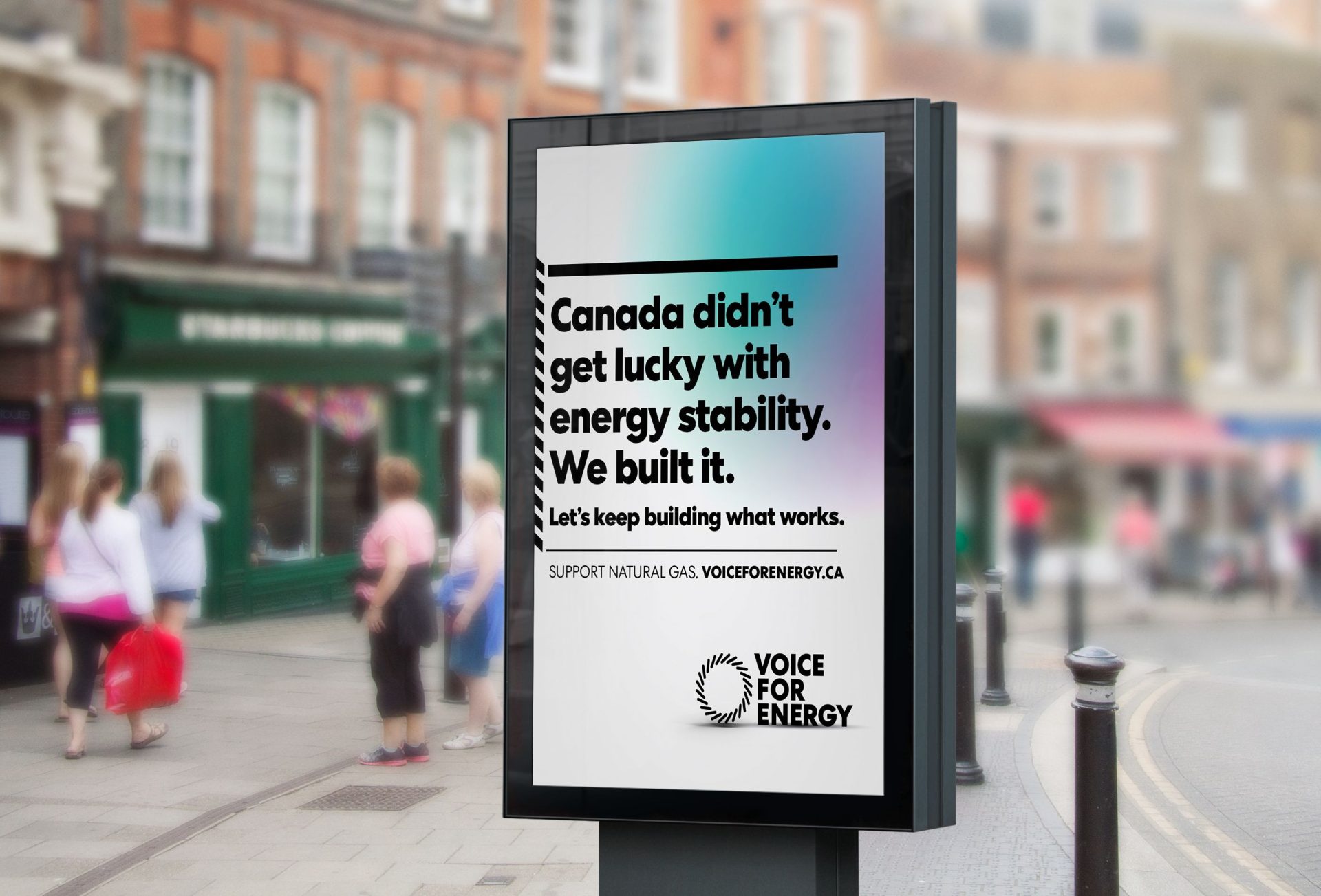
Voice for Energy is a national initiative by Great Canadian Resources Co. (GCRC), created to help Canadians better understand the role of natural gas and make their views known on the energy decisions that affect them. Our media mandate was to expand its reach, bringing more Canadians into the conversation and giving them a clear way to make their voices heard.

Media StrategyMedia Planning & BuyingAudience StrategyMedia Reporting & Optimization
Results

An integrated national and local media strategy delivered reach and measurable action.
Canadians reached
M+
Website visits
M
Letters sent to energy decision-makers
K+

Challenge

Energy policy was increasingly debated at the national, provincial, and municipal levels. Voice for Energy needed consistent visibility across Canada, but a fixed national media plan could miss the moments when an issue became urgent for a specific community.

The campaign also needed to reach beyond people already engaged with the industry and turn awareness into action.

Insight

Reaching Canadians was only part of the job. Media needed to give them a path to action. Research showed strong concern about rising energy costs, while many Canadians had limited familiarity with natural gas.

Media research also showed our audiences consumed a broad mix of social, video, news, audio, and out-of-home media. We needed an integrated media system that could introduce the issue widely, deepen understanding among interested audiences, and make the call to action relevant to where they lived.

Solution

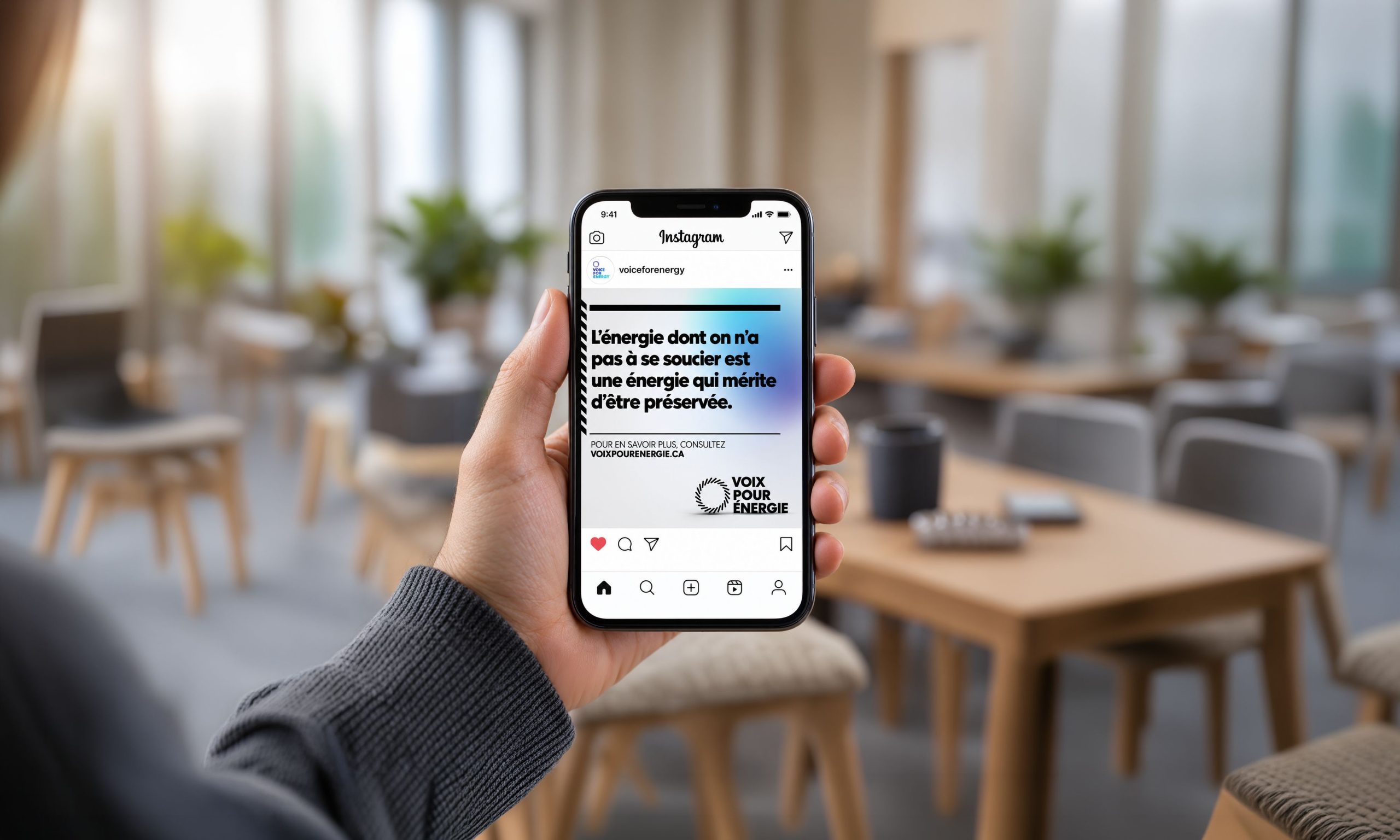
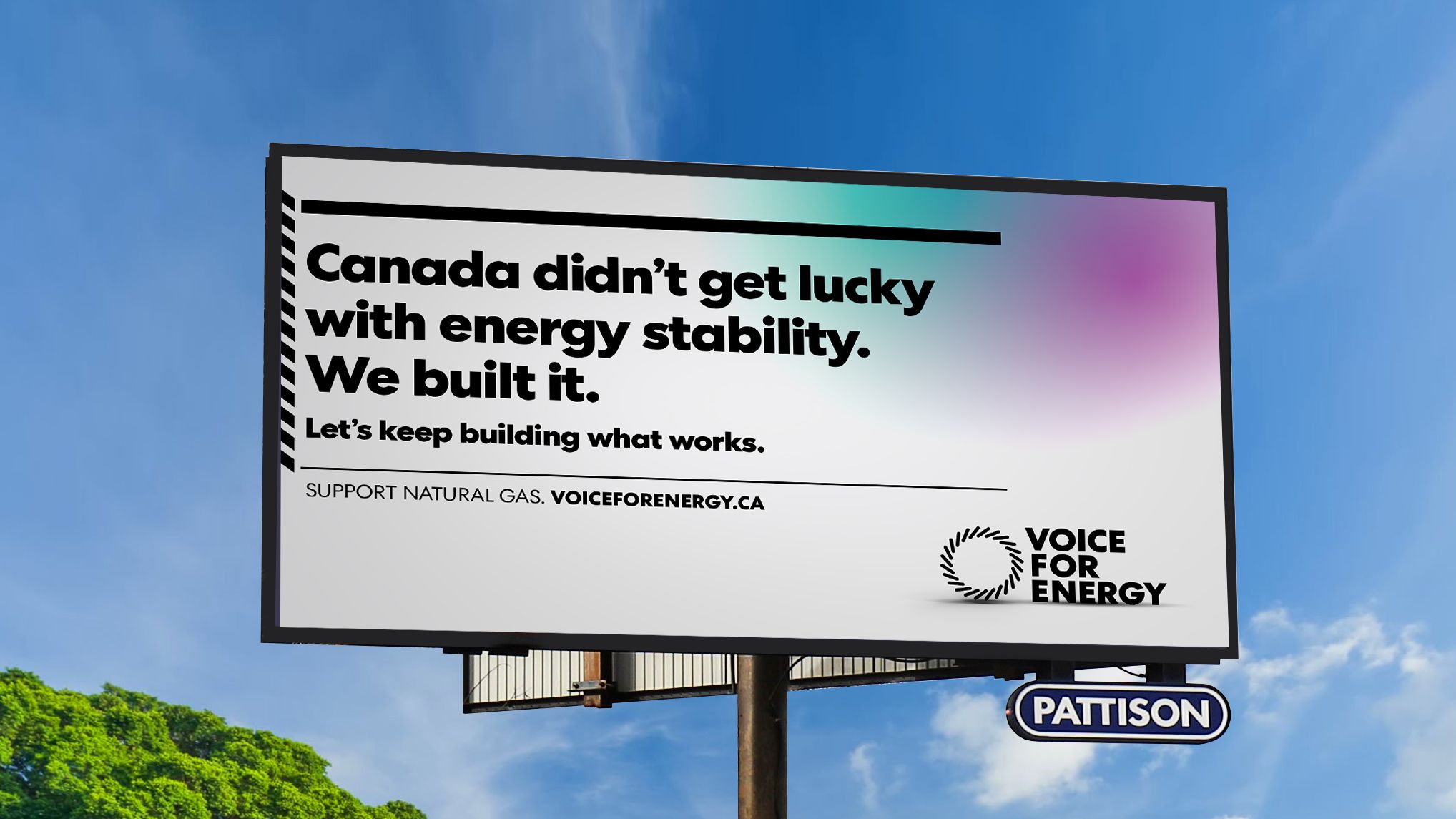
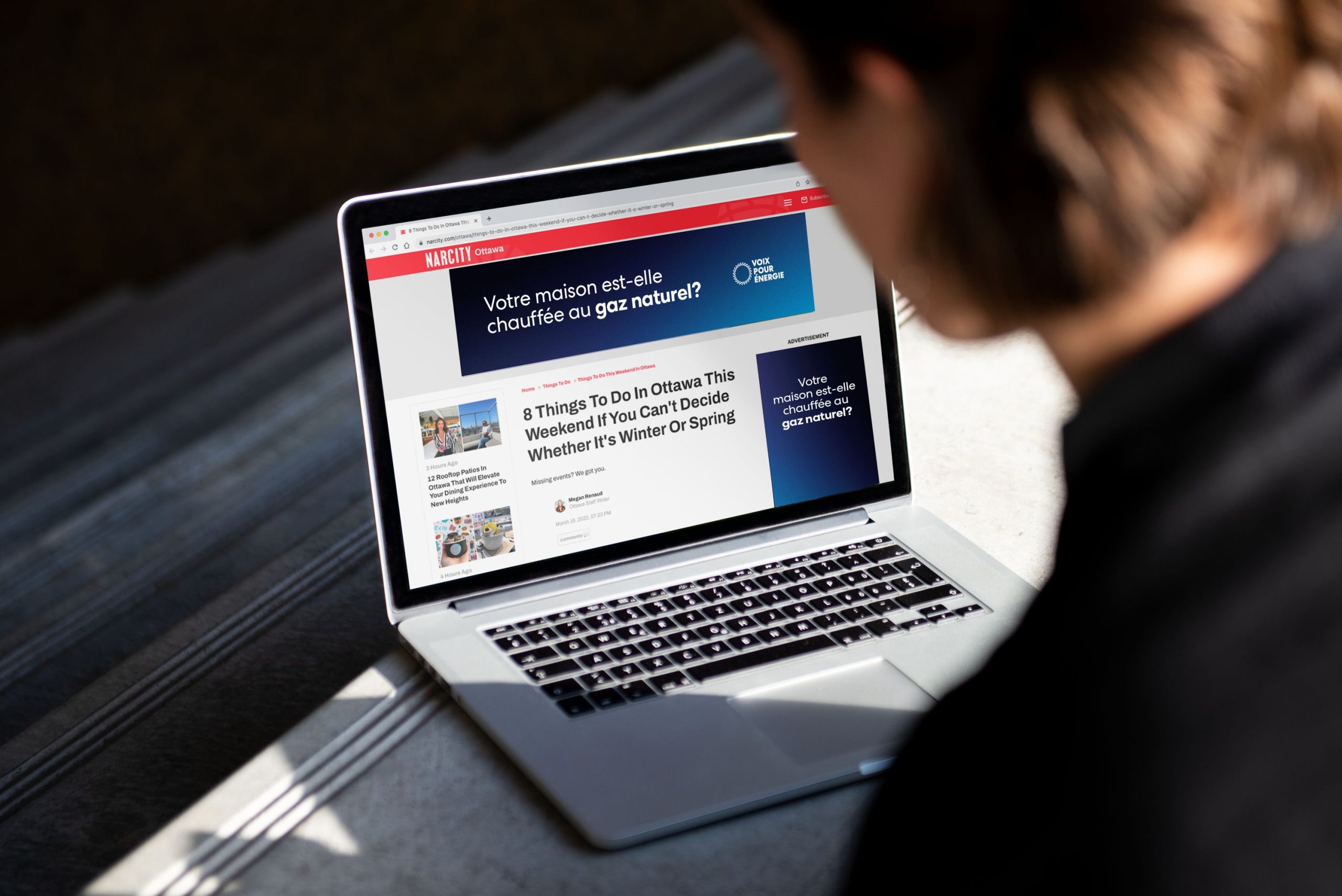
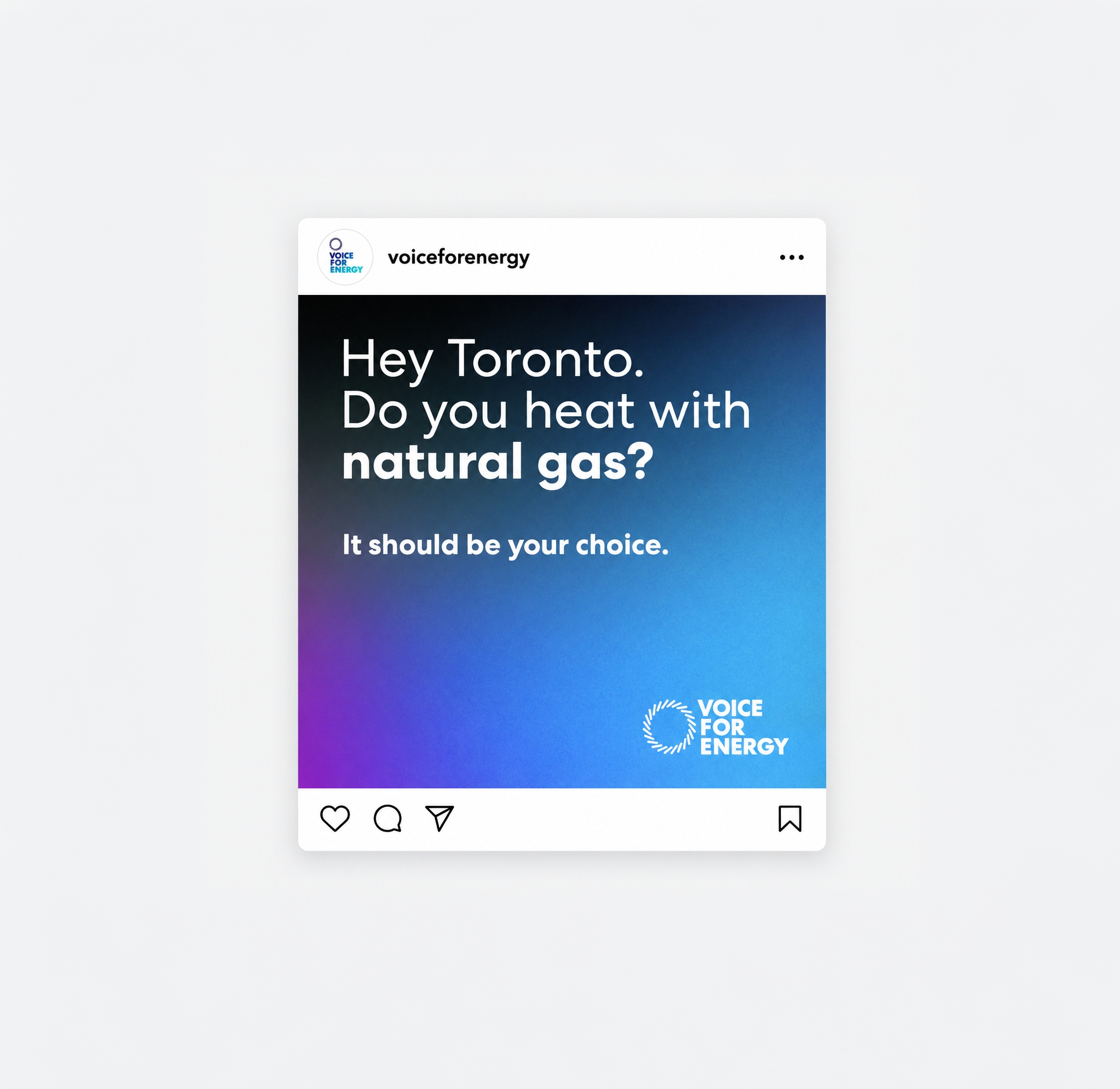
Working with our sister agencies, Acart and Giants & Gentlemen, we built an ongoing national media presence supported by targeted provincial and local campaigns. High-reach channels introduced the campaign and its core themes, while social, programmatic, native, and search gave interested audiences opportunities to explore the issues in more depth. Geographically targeted media then connected Canadians with relevant calls to action in their communities.

The strategy moved with the policy conversation. We increased investment in priority provinces, launched geographically specific campaigns as local issues emerged, and used weather-responsive placements to make seasonal messaging more timely. When a proposed policy change emerged in Burnaby, we adapted the campaign within 24 hours, with local creative, targeted media, and a letter to relevant decision-makers.

Throughout the campaign, polling, media performance, website activity, and letter submissions informed investment and messaging decisions.
INQUIRIES

Ready to break ground on something that lasts?

    Back